

I helped my brother at his pastry shop last month and realized that he has a mental complex. That experience showed me how much pretending to be another personality ruins one’s attractiveness. Let’s discuss it.
How to be confident in ourselves
Sometimes, we want to be confident in ourselves.
One typical example that makes us lose confidence is feeling inferior about our own personality. Although it cannot be changed, we sometimes admire someone else and try to imitate them.
That causes multiple mental stresses, such as confusion about values, unnecessary dilemmas, the strain of maintaining a false persona, the desire to live honestly, and the fear of being exposed for our true nature.

Although rationality will solve it eventually, we sometimes don’t know the unattractiveness of living with a mental complex.
To understand the attractiveness of our unique personalities, I will introduce an example of the mental complex that an extroverted person—my brother—had. This perspective might provide confidence in living honestly.
My brother’s mental complexity
Experiencing a situation in which someone is pretending to be like us shows us the ineffectiveness of an inferiority complex.
If we are empathic and logical, we sometimes feel inferior to extroverts, who are less empathic and less logical. They can withstand social stress, live without overthinking, and be a part of a community.
However, when faced with the inferiority complex of extroverts, we will realize the futility of pretending.
To explain it, let’s look at the example of my brother.

One of my brothers was extroverted, which is the opposite of my personality. Since he was 5 years older than me, he often looked after me when I was a small child.
In a situation where there is a difference in strength and knowledge, like in my childhood, extroverts are attractive and caring. He taught me how to play. Although he treated me like a subordinate, I was proud of following him. If I did as he said, I could learn a new game. That pleased me.
Since there was a large difference in ability, he was confident when he was with me. That demeanor reassured me. Having a confident and talented boss makes their subordinates proud, even if the boss is arrogant, less empathic, and less logical.
In other words, I knew the attractiveness of his original nature. He was charming because he behaved like an extrovert. There was no inconsistency in his way of life.
To show his attractiveness
However, a mental complex ruined his personality. He misunderstood the essential value of his business.
Instead of giving orders to his staff, he was trying to be considerate so as not to make anyone feel negative. Since he was an extrovert who could not feel others’ emotions, his efforts were futile. The staff, including me, didn’t know what to do with his vague instructions and had to ask him many times. That stressed him.
I realized that I wanted him to issue orders arrogantly, as he did in my childhood. Empathy and logical sense are not essential for baking. Since he had learned baking pastry in France and was proficient in it, no one looked down on him. He could offer the skills he acquired in France to staff and customers in the local Japanese city where he lives now. That was enough to make his work worthwhile.
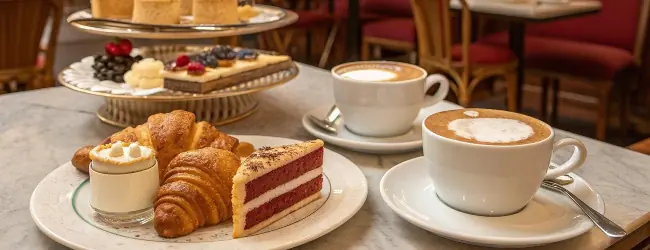
There was no need to be the best in the world. His skill and confidence reassure the staff, including me, and make them proud, even if he manages only one rural pastry shop.
That can also apply to us. From the perspective of our staff and customers, we don’t need to be the best in the world. Even as creators or philosophers in a small rural area, we can still be admired.
That is essential for attractiveness.
Conclusion
That realization showed me the attractiveness of our unique personalities.
Experiencing a situation in which someone is pretending to be like us shows us the ineffectiveness of an inferiority complex.
This perspective might provide confidence in living honestly.
Thank you for reading this article. I hope to see you in the next one.