

Recently, I recalled suppressed emotions from my past for the first time in a while. That showed me the process of resolving the past. Let’s discuss it.
How does our mind work?
Sometimes, we want to understand how we resolve recurring past negative experiences. Unresolved past emotions often arise as flashbacks, and they frequently torment us mentally.
Since recalling the past and repression occur instantly, we often cannot trace our thought process. That is why we want to understand our mental system of repression.
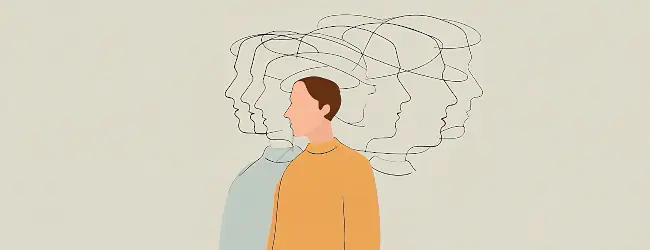
An effective solution is to try to conclude that it was a failure. That may enable you to accept and resolve the emotions. Today, I will explain the process.
Four processes of judgment
When you recall the past pain as a flashback, try to judge it rationally and conclude that it was a failure. In other words, cut your past losses. That enables you to feel the emotions you have ignored.
We evaluate each event and decide how to handle it. It has the following four processes:
- Recognizing the event, which always involves at least one problem
- Analyzing the problem and the essence of the problem
- Judging and responding based on rationality. If it can be solved actively, we feel positive, such as hope and excitement, and take action. If not, we feel negatively, such as discouraged and sad, and conclude that it was a loss.
- Having finished our judgment, move on to the next one.

We live while making decisions. When we cannot choose how to respond, we end up worrying about it continuously. That is the essence of a flashback—the resurgence and repression of past emotions.
It means it is halted at step 1 or 2 of the four steps above. Whenever we remember a past event, we try to identify what the problem was and determine what could have been done.
However, our immature rationality and confused minds prevent us from analyzing or evaluating properly. That makes us repress those emotions again and try to forget the event.
That is how we continuously remember the past.
Concluding it was a failure
That shows us a solution: judge it rationally and conclude it was a failure.
One main factor that prevents us from making judgments is our undeveloped rationality. We don’t know how to analyze and identify the true cause. That hinders our conclusion.
Rationality enables us to recognize the complexity of causality that cannot be analyzed perfectly. In other words, knowing that ‘the true cause cannot be identified’ is also reasonable. We have to understand our limits of recognition. The mindset that we must understand what we cannot understand creates confusion. That unreasonableness hinders our judgment.
We have to evaluate and decide in the moment each time, even if we are imperfect and inexperienced. Naturally, we make mistakes and fail. That is the healthy state.

When we conclude the meaning of the past event, we can accept the emotions. We may understand that it was a loss. We may feel, ‘It was a terrible experience!’
Judgment allows us to feel the emotion. Evaluating that it was a loss makes us realize that our past hard work and efforts were in vain. We become sad and shed tears.
However, it means we accept the emotion and let go of the past event. The decision is the solution. We understand we don’t have to be positive any longer. The moment we judge it a loss, we are freed from that past event.
The healthy state is focusing only on the current judgment, having completed all past pending judgments. It doesn’t mean we never face troubles or hesitation. Since we cannot foresee future problems perfectly, we can move forward cautiously while making mistakes.
We can decide in an imperfect state. It applies to how we judge the past. That resolves the past.
Conclusion
That is the mental system of repression.
An effective way to resolve the past is to conclude that it was a failure.
That may free you from the past.
Thank you for reading this article. I hope to see you in the next one.