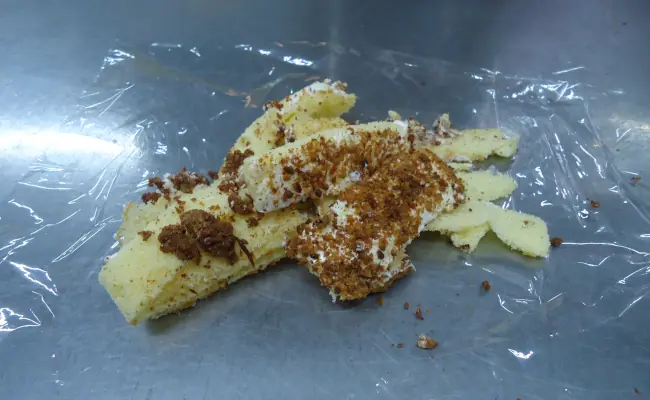
Although I have heard that pastry stores are busy during winter, I underestimated how busy they were. Yesterday’s busyness was about the same as the week before Christmas. It was no wonder that my brother asked for help.
Introducing an efficient method
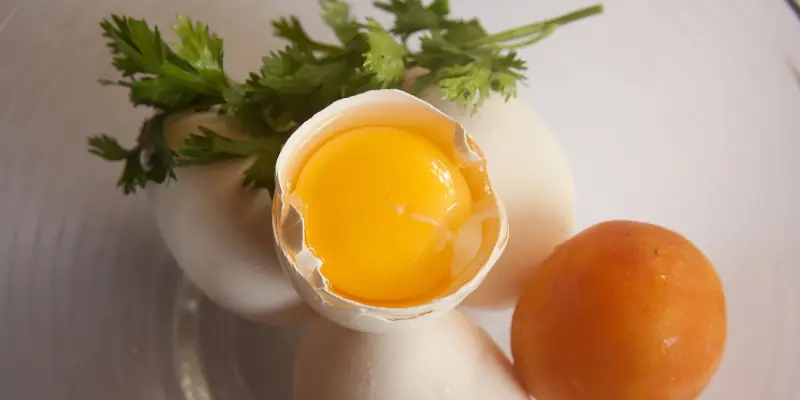
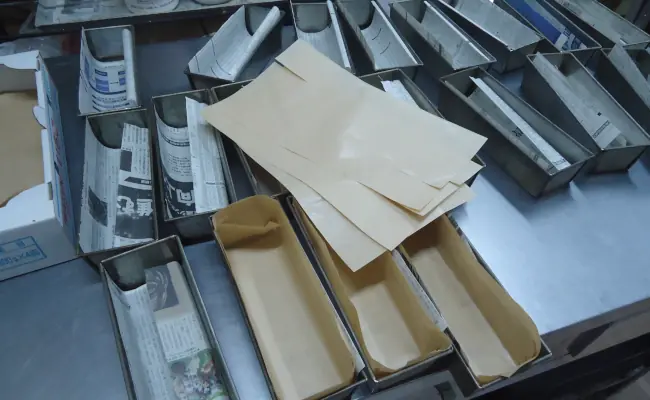
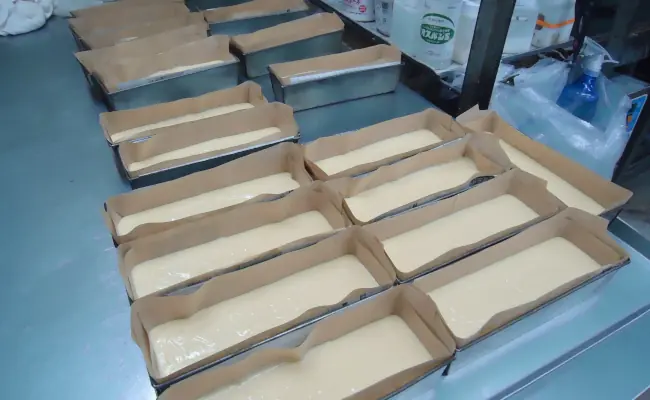
By the way, I introduced an efficient method for cracking eggs yesterday. In a pastry shop, some cakes use many eggs, such as pound cakes, which use over 60 eggs at once. Naturally, I needed to break many eggs, and it took a lot of time. I wanted to make it more efficient.
When breaking an egg, I realized there are two problems: it takes time to hit it against the corner, and the shell shattering could be frustrating. Since the shell thickness varied from egg to egg, I sometimes struggled to crack them cleanly.
To solve the problem, I came up with the idea of first giving a partial crack to many eggs with a sharp knife. Then, I cracked them individually by hand.
I knew that people in India and Southeast Asia often break eggs not by hitting them on a corner, but by making a crack with a knife and breaking them by hand. I applied that method.
Since there is already a sharp crack, it broke easily without the eggshell breaking into pieces. The attempt was a great success.
That saved a lot of time and effort. It seemed that neither my brother nor the other pastry chefs had that kind of idea. It is probably a fundamental improvement that only a beginner would come up with.
There are things that only a beginner can notice.
Conclusion
Anyway, I will help my brother again today.
There seem to be various areas for improvement.
Thank you for reading this article. I hope to see you in the next one.