
Considering how to predict the future has become my recent enjoyment. One area of my interest is the future of generative AI and how to adapt to new technology. Let’s discuss it.
How much does AI impact individual creators?
Sometimes, we want to know how to work with new technology, especially for creators.
A prime example is generative AI. Many people, even those who were not creators, have been interested in it, and the technology has improved dramatically.

Those environmental changes sometimes make creators who rely on traditional methods uneasy. Some may be compelled to force themselves to study generative AI, despite the aversion to its unnatural images or products.
Future prediction shows us how to handle those changes. It shows us that creators need to focus on what to express rather than on innovations. Today, I will explain it with an example of the VFX boom in the 2000s.
An example of the VFX boom
Creators need to focus on what they want to share rather than new technology. In creation, technology is a means, not an end. Although innovative methods are exciting and increase possibilities, there is no need to force their adoption if they go against your vision.
Creators who rely solely on technology will not last long. On the other hand, creators with a desire for expression can incorporate appropriate equipment based on their efficiency.
To make it easier to understand, let’s look at an example of the VFX boom in the 2000s.
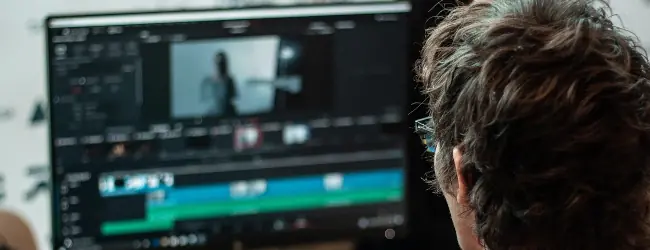
From 2000 to around 2007, there was a VFX (visual effects) boom in the film industry. It was a new technology that enabled video creators to integrate computer-generated 3D imagery with live-action footage. For example, until then, backgrounds had to be built with real objects. However, after adapting VFX, they could composite it with 3D-CG. That resulted in significant cost savings for filmmakers.
Since the film industry had a large market, creators who could create VFX became highly paid, and many people rushed into that field. Some universities established VFX courses and started cultivating specialized talents. Around 2005, being a VFX creator was a dream job for many people.
The end of the boom
However, it didn’t last even 7 years. Since it became competitive, profits started to decrease. In 2012, large-scale layoffs of VFX workers took place, marking the end of the VFX boom.
Video creators who only studied VFX had no choice but to withdraw from the film industry. On the other hand, creators with a desire for expression continued to be active on platforms like YouTube and social media.

Although integrating 3D-CG with real footage was an excellent technology, it was not particularly important to many video artists. Many individual creators didn’t rely on VFX technology, not even 3D-CG.
Look at the current individual movie creators. You can see the percentage of people using high-level VFX. It is significantly low. Although many people excitedly said that VFX would change the whole film industry, it had almost nothing to do with small-scale production.
Predicting the post-AI boom
That resembles the current AI boom. Many people enthusiastically claim that generative AI would transform the entire creative world. However, what matters is the desire to express, not technology.
Creators with a desire for expression will keep going, while those who don’t will disappear.
Look at the current video that is trending on social media. They are focusing only on technological innovation and talking about what has become possible with the latest update.
They are creators without an inner desire for expression. They just want to stand out with the latest trends. Those products are not expressive works. Their creation will stop when people stop talking about it.

In other words, we don’t need to envy those fake creators. They will be gone in 7 years. Although AI will change major filmmakers, it will not affect individual creators so much.
After all, in the creative industry, what you want to convey matters, not technology. Many artists still create key elements by hand, even though computers are now essential to society. That is the essence of creation.
Innovation is a part of efficiency. We don’t need to force ourselves to introduce it. Implement it only in areas where it seems likely to improve your efficiency.
Conclusion
That is why creators need to focus on what they want to share rather than on new technology.
In creation, technology is a means, not an end. Although innovative methods are exciting and increase possibilities, there is no need to force their adoption if they go against your vision.
This perspective might calm you and help you proceed in your own way.
Thank you for reading this article. I hope to see you in the next one.