
I like to predict the meaning of the strange, contradictory phenomenon in the world. One example is war. Although it sacrifices people’s lives and livelihoods, there must be a meaning in it. Let’s discuss my hypothesis.
Why do they wage war?
Sometimes, we want to comprehend people’s contradictory behavior. Things we cannot understand make us anxious. On the other hand, being predictable allows us to prepare. That reassures us.
Fundamentally, life doesn’t do anything unnecessary. It has evolved from simple forms and survived by adding necessary functions. Even if some features have degenerated, our main qualities, such as personalities and behaviors, should have meaning.
One example of strange behavior is war. Killing each other contradicts the pursuit of a prosperous life.

We are now living in an era where war could happen soon. You may also feel anxiety from the current international situation.
That is why we want to understand the meaning of war. That allows us to respond rationally and calmly.
In my hypothesis, one rational reason for war is to promote social cooperation. It tells us that adapting to change determines long-term prosperity more than considering winning or losing in the wars, especially the ones of the near future. Today, I will explain why.
Two types of war
In my opinion, we need to neither predict which side will win nor side with the winners in the upcoming war. Instead, we need to focus on the changes that occur during and after. That determines long-term prosperity.
There are two types of war, as follows:
- A war for control
- A war for the economy
The former—a war for control—is to dominate people and gain authority. It is based on a feature of social animals. For example, apes fight each other to determine the group boss. Land mammals fight to secure their territory. Those behaviors realize the efficient distribution of food and sustain the species.
This type of war happens when deciding on a leader. An example is the war currently happening in the Gaza Strip and Sudan. Siding with the winners makes us prosperous. This kind of war leads to prolonged resentment and conflict.
A war for the economy
On the other hand, the latter—a war for the economy—is to resolve economic frictions. This is an intellectual battle that only humans can wage.
The economy is the exchange of goods and services. In other words, it is a form of human cooperation.
However, values can sometimes conflict. One community can stop cooperating economically when it feels that its products or services are being unfairly underpriced. On the other hand, the other side wants to obtain products or services cheaply.
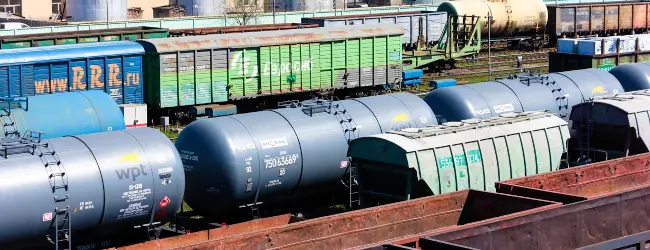
An example is the war in Ukraine. The Western countries wanted the Russian resources and services to be cheaper. If the Western countries did not value them, they should have bought from other suppliers. However, they depended on Russian resources. They carried out various schemes to bring resources from Russia at a low cost.
If unfair demands continue even after cutting ties, retaliation becomes a reasonable solution. It is like our personal relationship. That caused the war in Ukraine, from my perspective.
In this type of war, the purpose is correcting the economic discord, not about killing people in the other country. Economic benefits or concessions often make the community cooperate even with long-term hostile forces. After the war, grudges and emotional conflicts tend to fade sooner than a war for control.
Upcoming wars
Upcoming wars will be the latter: the ones for economic frictions. A recession will trigger it.
Although defeat in wars for control means ruin, it doesn’t apply in wars for the economy. We need to distinguish them.
In this war, there is almost no point in predicting the winner and siding with it in the long term. There are two reasons.
First, the power balance and the situation can change dramatically in the short term. Even the relationship between the U.S., Russia, and China is uncertain. That makes predictions difficult.
Second, the winner doesn’t necessarily gain a profit, and being on the losing side doesn’t mean economic exclusion. Regions and communities that continue to provide valuable things will gradually receive fair recognition during the postwar economic boom. Examples include countries defeated in World War II. The defeat of a government doesn’t mean the defeat of an individual.
In other words, even defeat in war promotes economic efficiency in the long term, especially for the nations with contribution potential and the limits of their growth due to political constraints.
In the long run, it creates efficiency. That is the nature of wars for the economy.
Conclusion
That is my hypothesis of war: it is to promote social cooperation.
In my opinion, we need to neither predict which side will win nor side with the winners in the upcoming war. Instead, we need to focus on the changes that occur during and after. That determines long-term prosperity.
This perspective might reassure you and allow you to prepare calmly.
Thank you for reading this article. I hope to see you in the next one.