
I have tried to understand things not only from a personal psychological perspective but also from a broader, historical standpoint. I currently think that balancing both will enrich me. Today, let’s discuss the world’s system from a historical perspective.
How does the world work?
Sometimes, we want to understand how the world works. The fundamental principle enables us to predict and prepare for the future. Investment is one example. It can enrich us if we properly recognize the world’s situation, even in the financial market collapse. That reassures us.
However, we sometimes don’t know the word’s system.
One example is the relationship between the government and the economy. Although the government is not omnipotent, an increasing number of people are becoming more dependent on it. They believe the government will solve their problems.
In my opinion, the government cannot solve the fundamental economic problems. This idea enables us to predict and prepare for the future individually. Today, I will explain the logic. This perspective may allow you to decide on your own.
Three stages of human evolution
Governments cannot solve the fundamental economic problems, in my opinion. In other words, many countries cannot avoid inflation. The Japanese yen may become the major currency that loses the most value over the next 5 to 10 years.
Considering the purpose enables us to recognize its role.
The government is a part of the economy. In other words, the purpose of government is for the economy. Although governments may cease to exist, the economy lasts as long as humans continue to live.
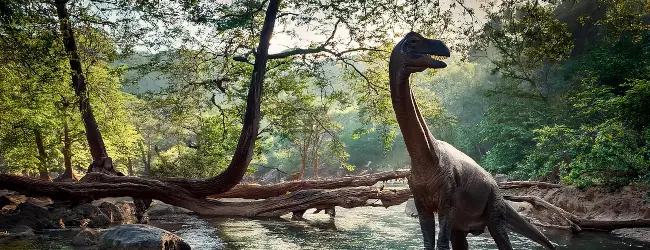
Human evolution has the following three stages:
- Animalistic stage: It is before becoming human (over 10,000,000 years ago). They were walking on all fours. They didn’t have social behavior.
- Primitive social stage: After people became human (5,000,000 years ago). They lived by hunting and gathering in small groups. There was a boss in the herd, a primitive social leader, like apes. They shared food and items through the leader’s discretion.
- Highly socialized stage: After people started agriculture (only 12,000 years ago). Agriculture enabled humans to begin large-scale cooperation, giving rise to the organized production and exchange we call the economy. That created many concepts unique to humans, such as ownership, assets, money, family, lineage, inheritance, management, jobs, government, and war.
Agriculture, the government, and the economy
Agriculture gave birth to the economy and the necessity of government.
Crops could be stored, and their harvest could be increased with effort. Agriculture was more efficient for survival and prosperity than hunting and gathering. Eventually, people started to rely on farming.
That created the concepts of management, professionalism, and exchange. Each one specialized in producing high value in a single field and exchanged it with others, enabling a more advanced and stable way of life. Some focused on manufacturing equipment, some specialized in cultivation, some constructed irrigation, and some managed.

However, living based on agriculture required patience and suffering. If only those who have suffered become abundant, it is natural for them to be unwilling to share their wealth. That created the concepts of ownership, assets, family, and inheritance.
At the same time, people understood that it can be more efficient to rob from others than to grow harvests themselves. Robbers began to appear. That gave birth to the concepts of government, soldiers, and war. People have come to need to protect their assets.
In other words, governments and war are natural, necessary, and inevitable elements for human activities. The purpose is the economy—a lifestyle created by agriculture.
Looking at the overall economy before the government
That shows us we need to look at the economy first. All governments will die, but the economy lasts as long as there are humans.
The government is for asset management. Its purpose is to control.
However, the management system can be outdated as times change. The more people struggle with outdated controls, the more inefficient it will be. It contradicts the purpose of government. Although decentralization creates room for improvement, it is tantamount to suicide for the government.
In other words, the government has no choice but to rebuild it. It cannot decentralize. An inefficient government can only move toward its demise and rebuild.

Investment shifts from overvalued sectors toward areas with growth potential. Its inefficiency can be seen in the government’s financial situation.
In my opinion, the Japanese yen may become the major currency that loses the most value over the next 5 to 10 years.
As the U.S. influence declines, China will become the next economic center. Then, India will be the next worldwide leader. The African continent will emerge after that.
The economy has its own flow. Investment leads the economy. Considering the overall economy shows us the preparations an individual can make, even if the government and many people decline.
Conclusion
That is why the government cannot solve the fundamental economic problems.
All governments will die, but the economy lasts as long as there are humans.
This idea may enable you to predict and prepare for the future individually.
Thank you for reading this article. I hope to see you in the next one.